
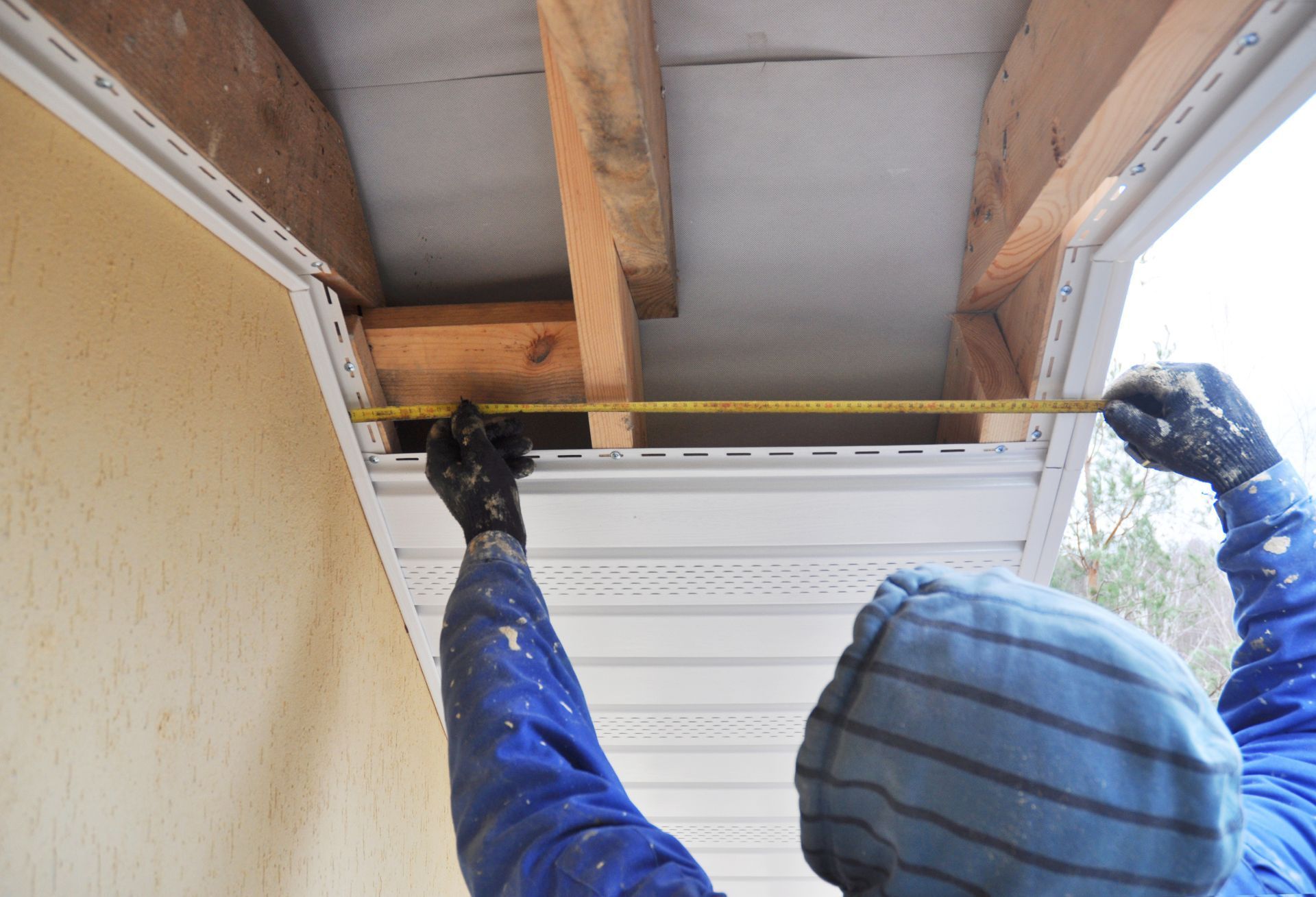
Soffit and Fascia Installation & Repair
Soffit and fascia services for homeowners throughout St. Lucas, Dubuque, Northeast Iowa, and Northwest Illinois.
The soffit and fascia may look like finishing details along your roofline, but they play a critical role in protecting your home. These components help regulate attic airflow, manage moisture, and protect the structural edges of your roof from water and pest intrusion.
Eagle Heights Roofing installs and repairs soffit and fascia systems designed to support proper ventilation, protect roof structure edges, and maintain long-term roofing system performance. Whether part of a larger exterior project or a targeted repair, this work is completed with attention to how your entire roof system functions.
Understanding Soffit and Fascia
Soffit and fascia are essential components of a properly functioning roofing system. Together, they help control airflow, protect vulnerable edges, and support other exterior systems like gutters.
- Soffit is installed beneath the roof overhang and allows air to enter the attic, supporting proper ventilation.
- Fascia runs along the roof edge and provides structural support for gutters while protecting the ends of roof rafters.
When these components fail, moisture can build up in the attic, wood can begin to rot, and pests can find entry points into the home.
Improper ventilation or deteriorated roofline components can shorten the lifespan of the entire roofing system. Maintaining soffit and fascia is key to protecting both your roof and the structure beneath it.
Signs Your Soffit or Fascia May Need Repair or Replacement
You may need soffit or fascia service if you notice:
- Peeling paint or visible water staining along the roofline
- Soft, rotting, or deteriorating wood
- Gaps, holes, or openings where pests can enter
- Gutters pulling away or sagging from the fascia
- Poor attic ventilation or excessive heat buildup
- Visible warping or separation of materials
Addressing these issues early helps prevent more extensive structural damage and improves overall roof performance.
What to Expect During Soffit and Fascia Installation
Soffit and fascia work is completed using a structured process to ensure proper fit, ventilation, and long-term durability.
1. Inspection of Existing Roofline Components
The soffit, fascia, and surrounding roof edges are evaluated for damage, ventilation needs, and structural integrity.
2. Removal of Damaged Materials
Deteriorated wood, compromised panels, or failing sections are carefully removed.
3. Installation of Soffit Panels
New soffit panels are installed, including vented sections where airflow is required for proper attic ventilation.
4. Installation of Fascia Boards
Fascia is installed or replaced to provide a solid, secure edge and proper support for gutters.
5. Integration with Roof Edge and Gutter System
All components are aligned to ensure proper water flow and compatibility with existing roofing and drainage systems.
6. Final Fit, Finish, and Ventilation Check
The completed installation is checked for proper airflow, secure fastening, and a clean, uniform appearance.
Why Choose Eagle Heights Roofing for Soffit and Fascia
Soffit and fascia work is more than a cosmetic upgrade — it plays a key role in how your roofing system performs.
Eagle Heights Roofing approaches soffit and fascia with a focus on ventilation, moisture control, and long-term durability.
- Installation designed to support proper attic airflow and ventilation
- Protection of roof structure edges from moisture and pests
- Integration with roofing and gutter systems for complete performance
- Durable, low-maintenance material options
- Clean, precise finish work that complements your home
- Coordination with roofing or siding projects when applicable
Our approach ensures these components function as part of the overall roofing system, not just as exterior trim.
Questions Homeowners Ask Before Scheduling
Homeowners in St. Lucas, Dubuque, Northeast Iowa, and Northwest Illinois often want to know how soffit and fascia work fits into other projects, what materials last longest, and how to tell when replacement is necessary instead of repair.
What signs indicate soffit or fascia needs replacement?
Common signs include water staining, peeling paint, soft or rotting wood, and gaps where pests can enter. If gutters are pulling away from the roofline, the fascia may also need replacement.
How does soffit improve attic ventilation?
Vented soffit allows outside air to enter the attic, working with ridge or other vents to create airflow. This helps reduce heat and moisture buildup, improving the performance and lifespan of the roof.
These components are more accessible during roof replacement, allowing for better integration and avoiding the need for additional labor or scaffolding later.
Common materials include aluminum or vinyl soffit panels and treated lumber or composite fascia boards, selected based on durability and exposure conditions.
How long does soffit and fascia installation take?
Most residential projects are completed in one to two days, depending on the size of the roofline and the extent of the work.
If your roofline shows signs of wear or you are planning exterior improvements, the first step is a proper inspection.
Eagle Heights Roofing will evaluate your soffit, fascia, and ventilation to ensure your roof system is properly protected and functioning as intended.
Schedule an inspection today and get a clear assessment of your roofline condition and options.
Call (563) 363-3101 or request a free estimate online.