
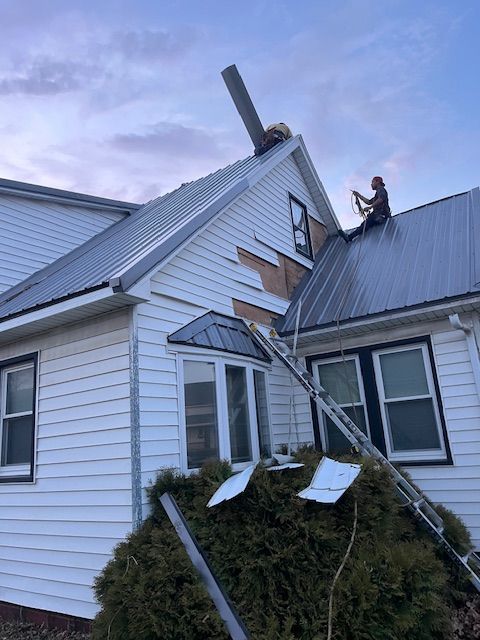
Protect Walls with Properly Installed Siding
Siding repair and replacement services for homeowners throughout St. Lucas, Dubuque, Northeast Iowa, and Northwest Illinois
Your siding plays a critical role in protecting your home from moisture, temperature changes, and weather exposure. When siding is damaged, improperly installed, or nearing the end of its lifespan, water can work its way behind the panels and begin affecting the structure beneath.
Eagle Heights Roofing provides siding repair and replacement services designed to manage water properly, protect the underlying structure, and improve long-term exterior performance. Every project is completed with a focus on how the siding integrates with the rest of your exterior system.
Understanding Siding and Exterior Protection
Siding is not designed to be completely waterproof. Instead, it works as part of a layered system that manages water and protects the structure behind it.
This system includes:
- Siding panels that shed the majority of water
- Flashing around windows, doors, and penetrations
- House wrap or moisture barriers that protect the sheathing
- Proper fastening and spacing to allow for expansion and movement
When any part of this system fails, moisture can become trapped behind the siding, leading to rot, mold, and structural damage.
Proper siding installation is about managing water and protecting the structure — not just covering the exterior.
Signs Your Siding May Need Repair or Replacement
You may need siding repair or replacement if you notice:
- Cracked, warped, or loose panels
- Fading, discoloration, or visible aging
- Peeling paint or bubbling surfaces
- Moisture damage or soft spots in the wall
- Gaps around windows, doors, or corners
- Drafts or increased energy costs
- Evidence of water intrusion or mold
Addressing these issues early helps prevent damage to the sheathing and framing behind the siding.
What to Expect During Siding Installation
Siding work is completed using a structured process to ensure proper water management, durability, and appearance.
1. Inspection of Existing Siding and Structure
The siding, trim, and underlying sheathing are evaluated for damage, moisture intrusion, and structural integrity.
2. Removal of Damaged or Existing Materials
Old or compromised siding is removed carefully to expose the wall assembly.
3. Repair of Underlying Sheathing (if needed)
Any soft, rotted, or damaged sheathing is replaced to provide a solid base for new siding.
4. Installation of Flashing and Moisture Barriers
Flashing is installed around windows, doors, and transitions to direct water away from vulnerable areas.
5. Installation of New Siding Panels
Panels are installed with proper fastening, spacing, and overlap to allow for expansion and effective water shedding.
6. Final Fit, Finish, and Sealing
All trim, corners, and seams are completed to ensure a clean appearance and proper protection against moisture.
Why Choose Eagle Heights Roofing for Siding
Siding is more than an exterior finish — it is part of your home’s water management system.
Eagle Heights Roofing approaches siding with a focus on durability, moisture control, and integration with the rest of your exterior.
- Installation focused on proper water management and drainage
- Attention to flashing, transitions, and critical detail areas
- Repair of underlying structural issues when needed
- Material options selected for durability and performance
- Clean, precise installation with long-term reliability
- Coordination with roofing, soffit, fascia, and gutter systems
Our approach ensures your siding performs as part of a complete exterior system — not just as a surface layer.
Common questions about siding work
Homeowners considering siding work often want to know how long the project takes, whether the old siding needs to come off completely, and what material holds up best in this climate.
How long does a siding replacement take?
Most siding projects are completed in three to five days depending on the size of the home and the type of material being installed. Smaller repairs can often be completed in a single day.
What siding material works best in Iowa?
Vinyl siding is low maintenance and resistant to moisture, while fiber cement offers increased durability and impact resistance. Steel siding may also be used in areas prone to hail.
Why does siding warp or buckle over time?
Siding can warp when it is installed too tightly, lacks proper expansion gaps, or is exposed to excessive heat. Moisture trapped behind the panels can also contribute to warping.
When should siding be replaced instead of repaired?
Replacement is recommended when damage is widespread, materials are no longer available, or the underlying structure has been compromised. Isolated issues can often be repaired.
What happens if the sheathing is damaged?
If damaged sheathing or framing is discovered, it is repaired or replaced before new siding is installed to ensure long-term performance.
If your siding is showing signs of wear, damage, or age, the first step is a proper inspection.
Eagle Heights Roofing will evaluate your siding, underlying structure, and moisture protection system to ensure your home is properly protected.
Schedule an inspection today and get a clear assessment of your siding and exterior condition.
Call (563) 363-3101 or request a free estimate online.